CrossFit Training Explained: What It Is, How It Works, And Why So Many People Swear By It
Few fitness movements have grown as fast or sparked as much conversation as CrossFit. Walk past any CrossFit gym on a weekday morning and the energy inside is impossible to ignore — people lifting, sprinting, jumping, and pushing through workouts that look nothing like a typical gym session. But beyond the noise and intensity, there is a well-structured training philosophy at work, one that has earned millions of loyal followers around the world. For anyone who has ever been curious about what CrossFit actually involves, whether it is the right fit for their lifestyle, or how a complete beginner can safely get started, this guide covers it all. No assumptions, no jargon left unexplained — just a clear, honest, and thorough look at one of the most talked-about training systems in modern fitness. Whether the goal is weight loss, strength building, or simply getting off the couch and into the best shape of one’s life, CrossFit might just be the answer.
What Exactly Is CrossFit and Where Did It Come From?
CrossFit is a high-intensity fitness program built around constantly varied functional movements performed at a relatively high level of effort. It was founded in the year 2000 by Greg Glassman in Santa Cruz, California. Glassman’s vision was to build a training system that prepared people for real-world physical demands — not just the kind of fitness that looks good in a mirror, but the kind that actually translates to everyday life. The idea was to combine elements from gymnastics, weightlifting, cardiovascular conditioning, and other athletic disciplines into one cohesive program.
What sets CrossFit apart from traditional gym training is its emphasis on broad fitness rather than specialization. While a bodybuilder trains primarily for muscle size and a marathon runner trains for endurance, CrossFit aims to develop competency across ten recognized physical domains — cardiovascular endurance, stamina, strength, flexibility, power, speed, coordination, agility, balance, and accuracy. This philosophy is often summarized with the phrase “jack of all trades, master of none,” though CrossFit practitioners would argue that being highly capable across all of these areas is itself a form of mastery.
Over the years, CrossFit grew from a single gym into a global franchise with thousands of affiliated locations worldwide. It also gained mainstream visibility through the CrossFit Games, an annual competition that crowns the “Fittest on Earth.” The sport has produced elite athletes and inspired a deeply passionate community, making CrossFit not just a workout program but a full lifestyle for many of its participants.
The Structure of a CrossFit Workout
Understanding how a CrossFit session is structured helps remove a lot of the mystery and intimidation surrounding it. Most CrossFit classes follow a consistent format that typically runs for about sixty minutes. The session usually begins with a warm-up designed to prepare the body for the demands ahead, activating key muscle groups and getting the heart rate elevated in a controlled way. This is followed by a skill or strength segment, where athletes work on a specific movement or lift — such as the deadlift, pull-up, or overhead squat — before the main event of the day.
That main event is known as the Workout of the Day, commonly referred to as the WOD. This is the portion of the class that CrossFit is most famous for — a structured, timed challenge that combines several movements into a single demanding effort. WODs can take many different forms. Some are completed as quickly as possible, with the goal being to finish a set number of rounds or repetitions in the shortest time. Others are structured as an AMRAP — As Many Rounds As Possible — within a fixed time window. The variety ensures that no two training days feel exactly the same, which keeps the body adapting and the mind engaged.
At the end of class, a cool-down and stretching period brings the session to a close. Coaches are present throughout the entire class, providing instruction, correcting form, and scaling movements for athletes of different ability levels. This coaching presence is one of the defining features of the CrossFit experience and one of the main reasons it works so well for beginners and seasoned athletes alike.
Common CrossFit Movements and Terminology
Walking into a CrossFit gym for the first time can feel like stepping into a room where everyone is speaking a completely different language. Acronyms fly around, movement names are called out rapidly, and whiteboard instructions look more like a puzzle than a workout plan. Getting familiar with the most common CrossFit terms and movements ahead of time makes the transition significantly smoother.
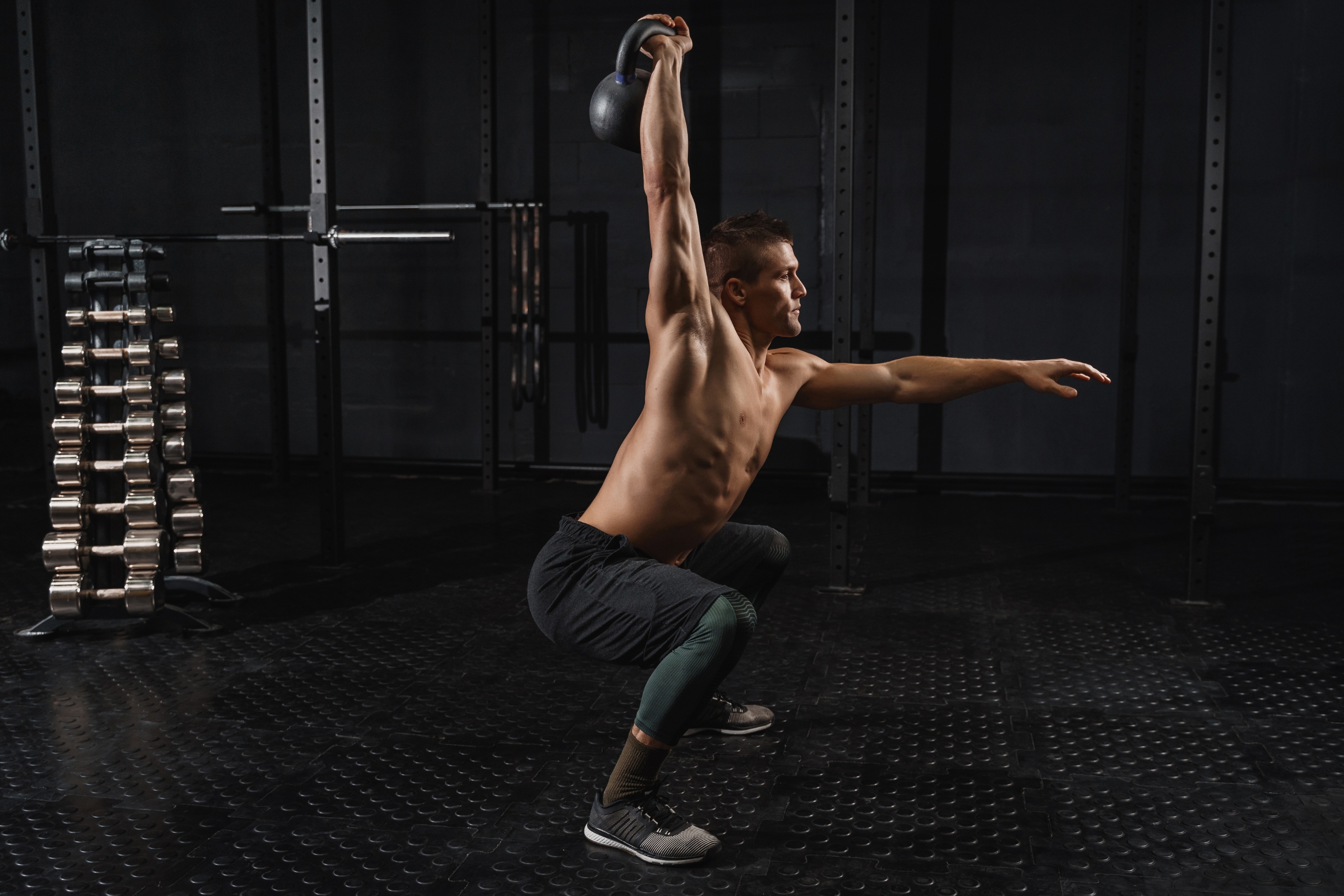
Some of the most frequently encountered movements include the air squat, the burpee, the kettlebell swing, the box jump, the rope climb, and the wall ball. On the weightlifting side, the clean and jerk, the snatch, the deadlift, and the thruster are staples of many WODs. Gymnastics-based movements such as the pull-up, muscle-up, handstand push-up, and toes-to-bar also appear regularly. Each of these movements has a scaled version available, meaning beginners are never expected to perform the full standard version from day one.
Common terminology worth knowing includes RX, which refers to completing a workout exactly as prescribed without any modifications. Scaled means the workout has been adjusted to suit the individual’s current fitness level. EMOM stands for Every Minute on the Minute, a format where a specific task is completed at the start of each minute. A PR is a personal record — beating one’s own previous best performance. Understanding this language early on helps new CrossFitters feel more at home in the gym environment and makes following class instructions far easier.
Who Is CrossFit Actually For?
One of the most persistent myths about CrossFit is that it is only suitable for already-fit, athletic individuals. This could not be further from the truth. CrossFit’s foundational principle is that its movements are universally scalable, meaning every single exercise can be modified to match any fitness level, age, or physical condition. A sixty-year-old recovering from knee surgery and a twenty-five-year-old competitive athlete can both complete the same WOD — just with different weights, different movement variations, and different expectations.
CrossFit has also been widely adopted in clinical and rehabilitation settings. Programs such as CrossFit Kids, CrossFit Teens, and CrossFit for older adults have been specifically developed to serve different age groups. There are also affiliated gyms that specialize in adaptive CrossFit, catering to individuals with physical disabilities or limitations. The diversity within the CrossFit community is one of its greatest strengths, and most boxes — the term used for CrossFit gyms — are known for their welcoming and supportive culture.
That said, CrossFit does demand a genuine commitment to learning proper movement mechanics. The technical nature of lifts like the snatch and the clean and jerk means that beginners who rush into heavy weights without mastering the basics are at a higher risk of injury. Most reputable CrossFit affiliates address this by offering a dedicated beginners or fundamentals course before new members join regular classes. This onboarding process is essential, and anyone serious about starting CrossFit should prioritize finding a gym that offers it.
The Physical and Mental Benefits of CrossFit Training
The benefits of CrossFit extend well beyond what happens inside the gym. On the physical side, the combination of strength training, cardiovascular conditioning, and high-intensity interval work creates a powerful formula for body composition changes. Regular CrossFit participants typically experience increases in lean muscle mass, reductions in body fat, improved cardiovascular health, better joint mobility, and enhanced overall athletic performance. Because workouts vary constantly, the body is rarely given the chance to adapt fully, which keeps progress moving in a way that more repetitive training styles often fail to deliver.
In the context of sports and fitness, CrossFit stands out for its real-world transferability. The functional movements it builds — squatting, hinging, pulling, pushing, carrying — are the same movements humans use in daily life. This means the strength and conditioning developed through CrossFit does not just stay in the gym. It shows up in how a person climbs stairs, lifts groceries, plays with their children, or performs in recreational sports. The carryover to everyday physical capability is one of the most commonly cited reasons people stick with CrossFit long after the initial novelty wears off.
The mental benefits are equally compelling. CrossFit workouts are deliberately challenging, and regularly pushing through difficult physical efforts builds mental resilience in a way that is hard to replicate elsewhere. The community aspect of CrossFit also plays a major role in motivation and accountability. Training alongside other people, celebrating personal records, and being part of a team-oriented environment fosters a sense of belonging and shared purpose that keeps people coming back consistently — often for years at a time.
How to Get Started with CrossFit as a Complete Beginner
Getting started with CrossFit does not require peak physical fitness, expensive equipment, or prior athletic experience. What it does require is the right gym, a coachable attitude, and realistic expectations about the early stages of the journey. The first step is finding a reputable CrossFit-affiliated gym in the local area. Not all boxes are created equal, so visiting a few options, observing a class, and speaking with the coaching staff before committing is a worthwhile investment of time.
Once a gym is selected, most beginners will be directed through a fundamentals or onboarding program before joining regular group classes. This period — usually spanning anywhere from three to six sessions — is used to teach the foundational movements, introduce the culture of the gym, and assess individual mobility and fitness levels. It might feel slow at first, but this phase is genuinely important. Athletes who rush past the fundamentals stage almost always encounter avoidable issues down the line.
From there, consistency is everything. Attending three to four sessions per week is a commonly recommended starting point, giving the body adequate time to recover between training days while still building momentum. Eating well, sleeping enough, and staying hydrated all significantly impact how quickly progress is made. Keeping a training journal to track WOD times, weights lifted, and how each session felt adds a layer of accountability and makes it easy to see how far things have come. CrossFit rewards those who show up regularly and approach the process with patience — and the results, both physical and mental, are well worth the effort.
Conclusion
CrossFit is far more than a workout trend — it is a thoroughly designed training system that has transformed the health and fitness of millions of people across all ages, backgrounds, and ability levels. From its foundational philosophy of broad, functional fitness to the structure of its daily workouts and the depth of its global community, CrossFit offers something that few other training programs can match: a complete physical and mental challenge wrapped in a supportive, high-energy environment. For beginners, the most important things to remember are to find a quality gym with experienced coaches, go through the fundamentals program without skipping steps, and approach each session with patience and consistency rather than ego and urgency. Progress in CrossFit is real, measurable, and deeply satisfying — but it takes time, just like anything worth doing. Whether the starting point is zero fitness experience or years of gym background, CrossFit meets every individual exactly where they are and builds from there. The hardest part is simply walking through the door for the first time.